I did eventually come down from the hilltop to poke around at things of a less heady and more earthy and historic nature. Luang Prabang is another of Aisa's UNESCO World Heritage sites, which means all the buildings in the old part of town are preserved for historic purposes and there are several well-organized and well-managed museums and lots of temples to visit. On the downside, almost all the places restricted or outright banned the use of cameras inside - most you weren't even allowed to take your camera in. So not a lot of photographs, but there were still plenty of things on the outside to amuse me.
The grounds of the Royal Palace Museum offered some good shutter fodder:
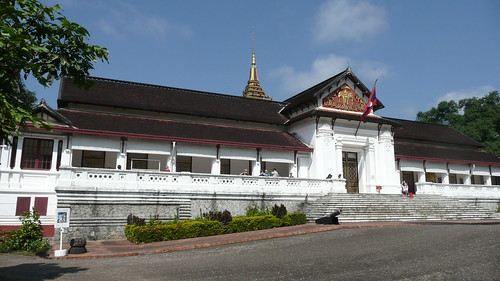
As the name suggests, it was originally built as a northern palace for the royal family (early 20th century) and has since been turned into a museum displaying the family's life style and ancient relics from the area.
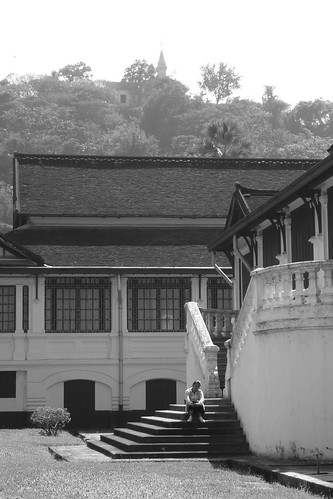
You can see the golden stupa in the photographs above at the top of the hill behind.
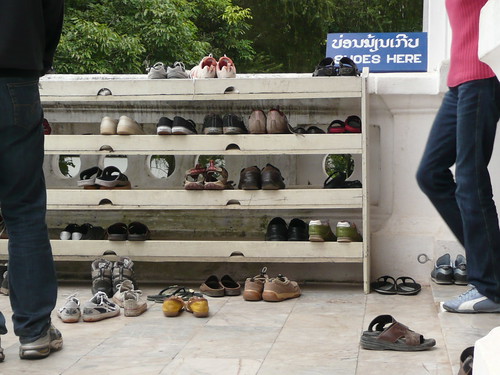
One of the other rules that is strictly enforced in Laos - and which really amuses me, is the "no shoes" rule. It's generally polite anywhere in Asia to remove your shoes before entering a house, but here they even ask you to take off your shoes before entering a hotel, store or in these museums. A lot of disgruntled tourists - but as I happen to love running around barefoot, so it was great for me!
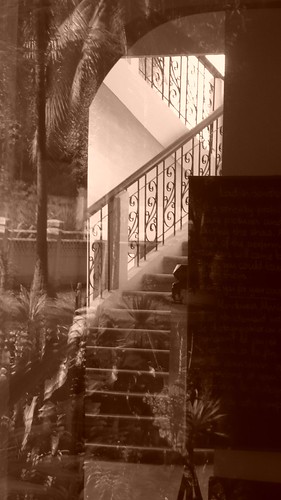
The grounds included a closed theatre, but I had fun photographing the reflections in the doors:
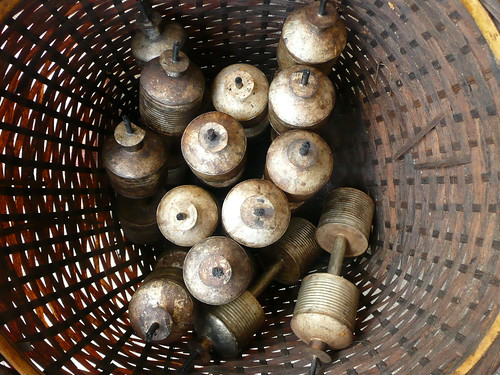
And the detritus of oil lanterns apparently used in some of the performances left outside:
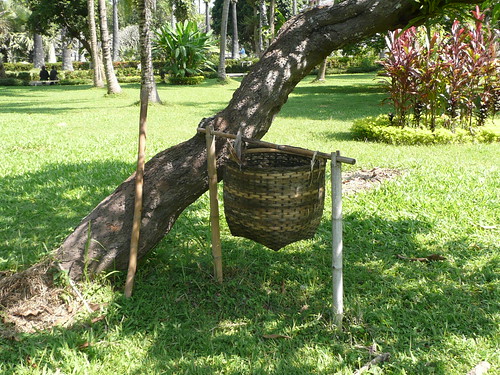
And you just have to love a place that can even make rubbish bins look good:
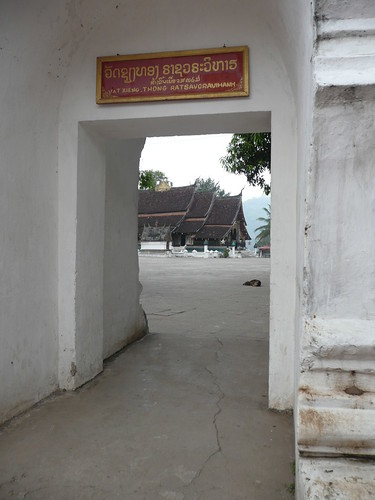
The temples are the main reason for Luang Prabang's existence.
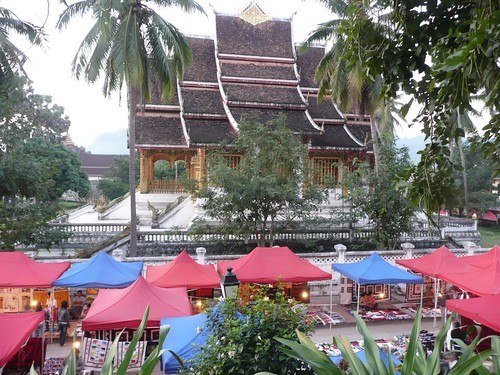
Even the bustling tourist trade and the night market revolve around the life of temples and the Buddhist traditions, festivals and celebrations.
Long a center of pilgrimage and retreat, the numerous Buddhist temples serve as a training ground for novice monks. It is expected that all devout Buddhist men serve as monks at some point in their lives, and many do. LP is one of the major cities for young boys (ages 15-20) to go and study as novice monks for a period of three or so months. So one of the major sights in LP is the young boys wrapped in shockingly bright orange robes running from temple to temple.
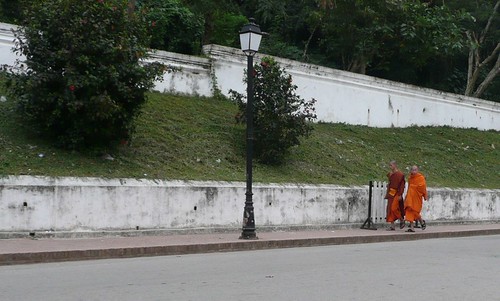
Obligatory young monk picture.
One of the major attractions is the early morning distribution of rice to the young monks by towns people. Every day around six am a family member will emerge with a warmer of sticky rice and a few morsels of food and sit on the road outside the house. A column of young novices will suddenly appear, each carrying a brass begging pot. They will pause, one by one in front of each person offering food and that person will put a small handful of sticky rice into each brass begging pot. The last novice in the column usually brings a small gift of thanks or blessing for those giving offerings.
Monks are only allowed to beg in the morning, and must take only what is given to them and nothing more. What appears in their pot is their single meal for the day.
I did not take any pictures of this - I just didn't feel right in anyway, shape or form. Nonetheless, it is a nice tradition to see, and I think it is a good character building activity for young, growing men. It teaches discipline, self-awareness and communal inter-dependency. Women can do it also, but it is a different and (apparently) less public experience.
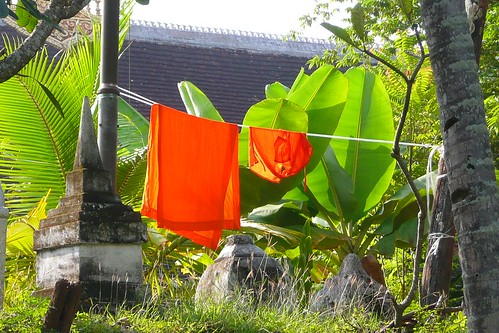
So the snap color of washed ropes airing on a line and the sounds of monks chanting in the mornings and evenings and the lively chatter of the young men dashing between temples creates an atmosphere of contemplation, reflection and anticipation of personal growth that saturates the entire city.
 There's something special about words of wisdom on a placard right under a painting of dogs playing poker.

 Monkish laundry.


 Why indeed...
 A good thought before entering the austere tunnels:


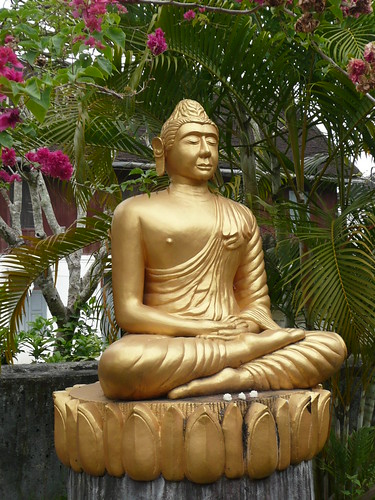
 The most fascinating sight for me, though, was the old Buddha graveyard. This whole area was full of Buddhas and other venerable statuettes in varying states of decomposition and destruction.

 Somehow the real beauty lies in the eternal serenity of even a dying Buddha...

 Death seemed to be a theme on the day. As I wandered to the fish pond, I found a serene yet oddly unsettling scene of a dead dove placed gracefully in the fork of a tree:
 But just in case I was to become too morose in my thoughts, I was met this happy guy on my way out of the temple grounds. With this much bouncy energy, who couldn't believe in life again?


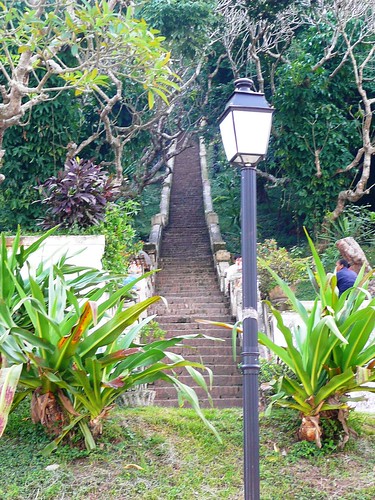 Like any self-respecting holy city, Luang Prabang not only brags of too many Buddhist temples and stupas, but also of a big hill in the center of town with a big stupa right at the top. And a lot of stairs to climb to get there.
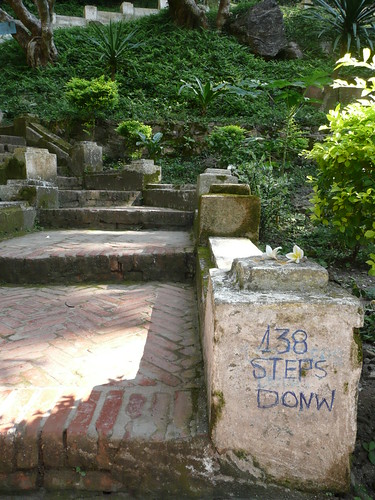 (The ones I've already climbed)
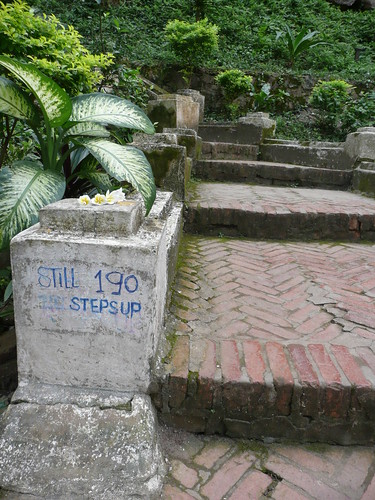 Excellent
I paused to admire the golden stupa, which apparently is a fairly new construction at the top of the hill, but replaces several centuries of past monuments.
Excellent
I paused to admire the golden stupa, which apparently is a fairly new construction at the top of the hill, but replaces several centuries of past monuments.
 More interesting were the types of offerings people left - the marigold cone with incense is particularly popular in Luang Prabang.
Then I wandered down and around yet a few more stairs:
More interesting were the types of offerings people left - the marigold cone with incense is particularly popular in Luang Prabang.
Then I wandered down and around yet a few more stairs:
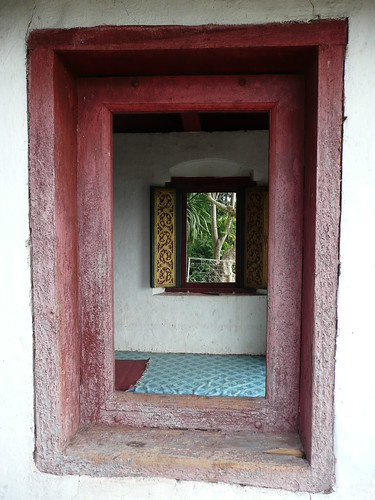
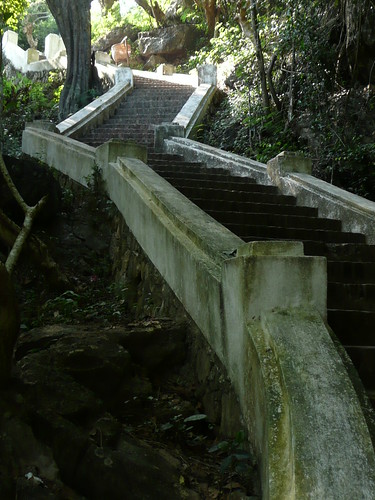 Peeked in a few windows:
 And climbed a few more stairs:
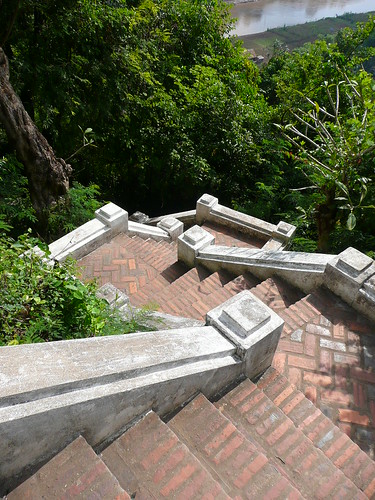 Until I found it:
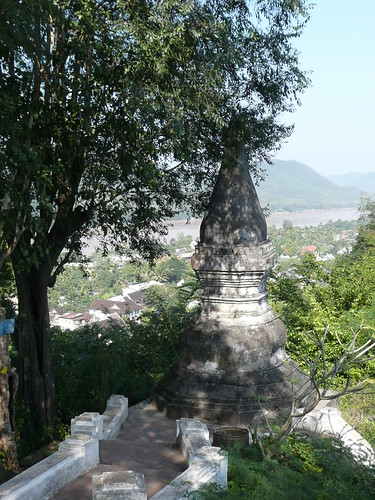
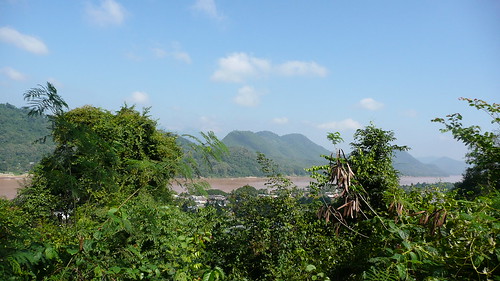 I sat on the far side of this little stone stupa and, for the next day and a half, this view was my company.